How To Choose The Best Time To Do The Ha Giang Loop
If you are wondering about the best time to do the Ha Giang Loop, the short answer is late September to early November. This period usually offers the most appealing balance of cooler temperatures, reduced rainfall, clearer mountain views, and spectacular seasonal scenery. It is particularly rewarding if you want to see rice terraces turning golden and buckwheat flowers beginning to bloom.
That said, there is no single perfect month for every traveler. Spring brings blossoms and comfortable riding weather, early summer delivers intensely green landscapes, and winter offers quiet roads and atmospheric mist. The right time depends on whether your priority is photography, road conditions, flowers, fewer crowds, or the most comfortable motorbike adventure.
Quick answer: When is the Best Time To Do The Ha Giang Loop?
For most travelers, October is the best month to do the Ha Giang Loop. The weather is generally cooler than during the summer, rainfall is lower than in July and August, and the highlands can be especially photogenic during the rice harvest and buckwheat-flower season. Climate data for Hà Giang also shows a clear shift from the wetter summer months toward a drier autumn, with July recording the highest average rainfall in the cited dataset.
Why the season matters on the Ha Giang Loop
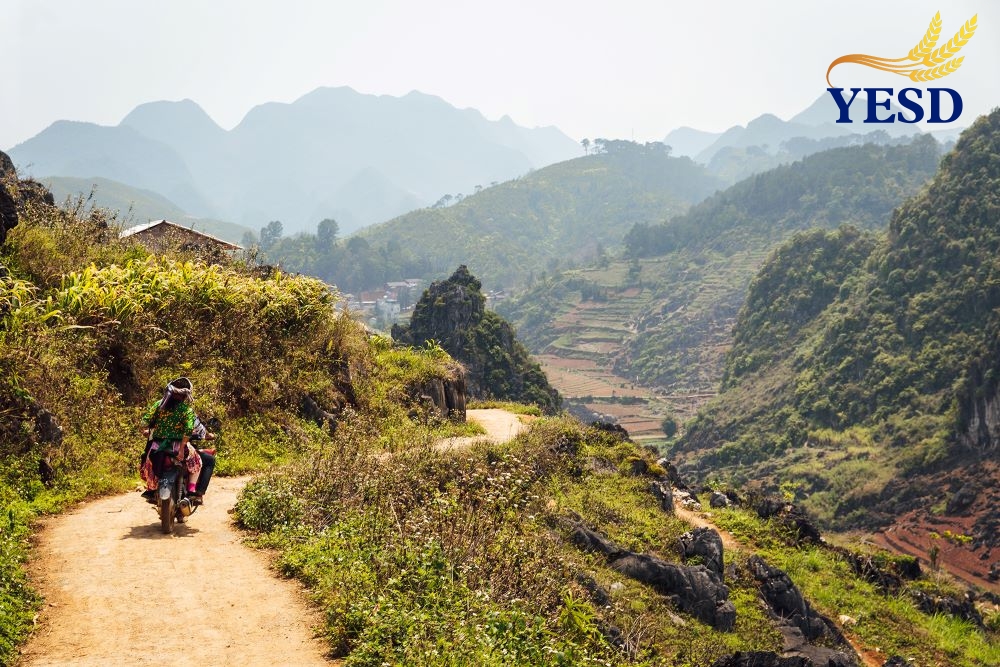
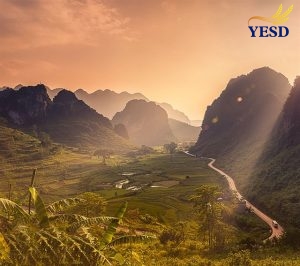
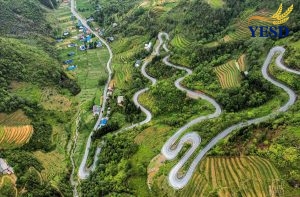
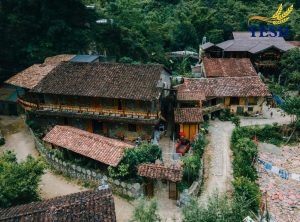
The Ha Giang Loop is not a flat sightseeing route. It winds through steep mountain passes, narrow roads, exposed viewpoints, and remote valleys around places such as Yen Minh, Dong Van, and Meo Vac. Weather can change quickly at higher elevations, so the month you choose affects far more than the view from your guesthouse.
Rain can make corners slippery, fog can reduce visibility, and cold wind can make a long motorbike day surprisingly uncomfortable. In contrast, clear and dry conditions make it easier to enjoy the scenery, stop for photographs, and navigate the mountain roads with greater confidence.
Weather averages are useful for planning, but they should not be treated as a guarantee. Hà Giang has a pronounced wet season, and July is typically one of the rainiest months, while late autumn and winter are generally drier. Conditions can also vary between Hà Giang city and the higher sections of the loop, so check locally before setting out each morning.
Autumn: The best time to do the Ha Giang Loop for most travelers
September to November
Autumn is the most popular season for the Ha Giang Loop because it combines memorable scenery with relatively comfortable riding conditions. Temperatures begin to ease after the hot and humid summer, rainfall generally decreases, and the mountain roads can offer clearer views than during the cloudier summer period. WeatherSpark identifies the period from mid-October to early December as one of the stronger windows for warm-weather activities in Hà Giang.
September and early October: golden rice terraces
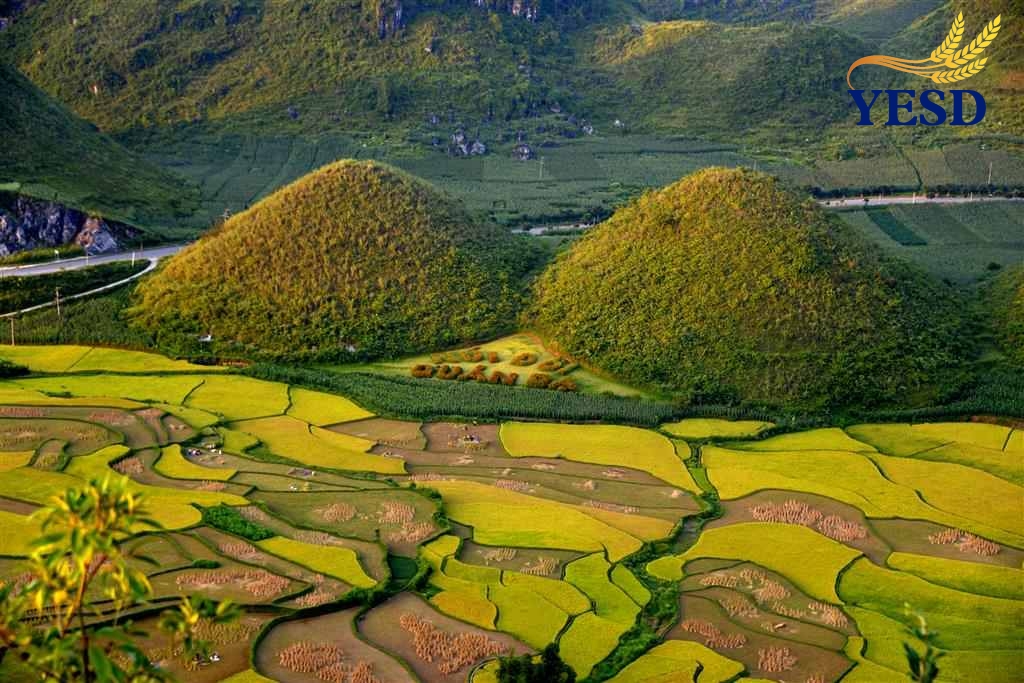
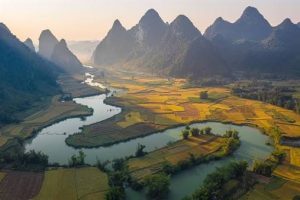
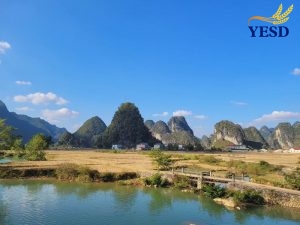
If your main goal is to photograph rice terraces, plan your trip for late September or early October. Depending on elevation and the year’s agricultural schedule, the fields may shift from green to yellow as harvest approaches. Hoang Su Phi is especially well known for its terraced landscapes, while viewpoints around Yen Minh and the Dong Van Karst Plateau add the dramatic limestone scenery that makes the loop so distinctive.
Harvest timing can vary from one location to another, so ask your accommodation host or local guide which valleys are looking their best when you arrive. A flexible itinerary is often more useful than trying to predict the exact peak week months in advance.
October and November: buckwheat flowers
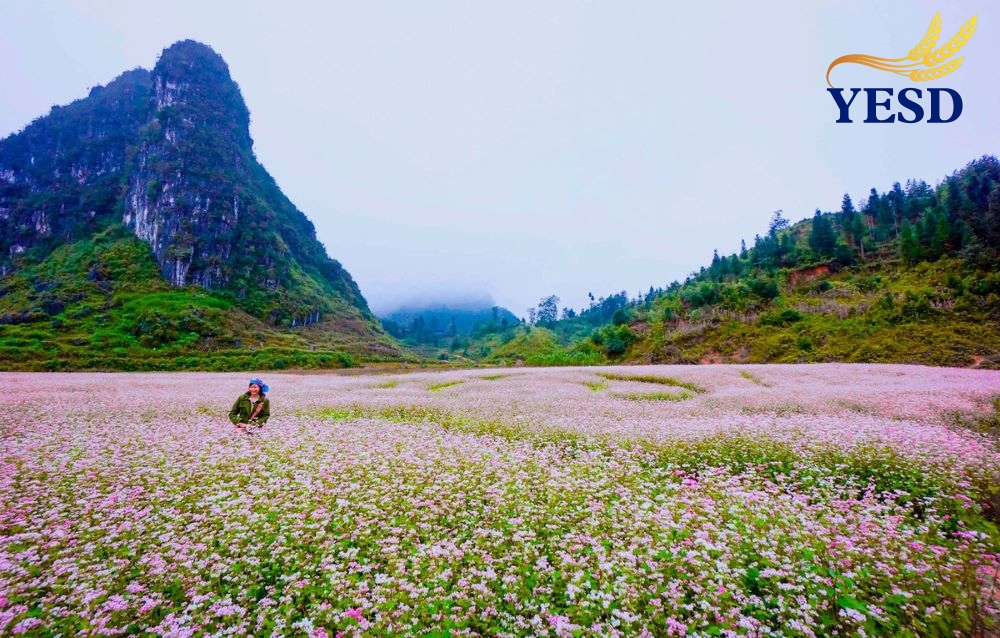
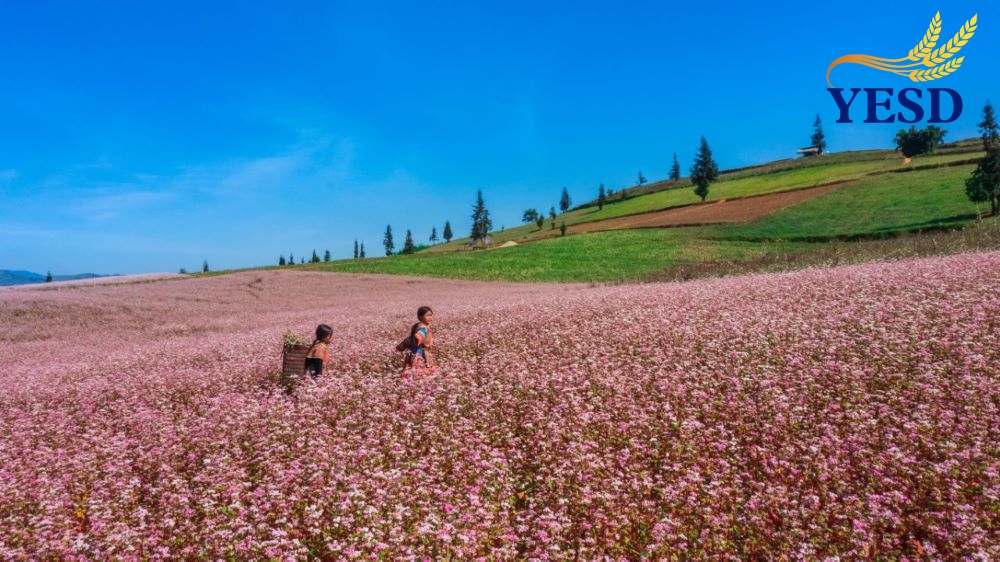
October and November are also associated with Ha Giang’s buckwheat flowers. The flowers can add pink, white, and purple tones to the highland landscape, particularly around rural valleys and festival areas. Exact flowering dates vary, so early November can be a worthwhile alternative if you want a slightly quieter experience than the busiest weeks in October.
Because autumn is widely regarded as the best time to do the Ha Giang Loop, accommodation and motorbike rentals may be in high demand. Reserve your transport and first night or two ahead of time, especially if you are traveling during a public holiday or a popular festival period.
Spring: The best season for blossoms and comfortable riding
February to May
Spring is an excellent choice for travelers who want mild conditions, fresh green scenery, and flowering trees. February and March are the most appealing months for peach and plum blossoms, which can bring soft pink and white color to villages and hillsides.
By April and May, temperatures are warmer, landscapes become greener, and the loop can feel lively without the intense rainfall associated with the height of summer. Climate averages show a steady warming trend from March through May, with average maximum temperatures rising from about 22.5°C in March to 28.7°C in May in Hà Giang city.
Spring is particularly suitable for first-time visitors, photographers, and travelers who prefer a balanced trip rather than extreme heat or persistent rain. Tet, the Vietnamese Lunar New Year, may fall between late January and February, so check the dates before booking. During the holiday period, transport, accommodation, and rental bikes can be more difficult to arrange in smaller towns.
Early summer: The best time for vivid green landscapes
May to early June
If golden rice terraces are not your priority and you would rather see the mountains at their most intensely green, consider May or early June. Rain-fed landscapes begin to look lush, and rice terraces can reflect the sky and surrounding hills when water is added to the fields.
Early summer can be rewarding because it often gives you the visual drama of the green season before the heaviest rainfall arrives. However, conditions become hotter, more humid, and less predictable as June progresses. The cited climate data records average rainfall increasing substantially from May into June and reaching its highest levels in July.
Build flexibility into your route during this period. A short shower may simply make the scenery more atmospheric, but prolonged rain can affect road conditions and visibility. Travelers who are not experienced on mountain roads may prefer an Easy Rider, meaning a local driver who operates the motorbike while you ride as a passenger.
Summer: Lush, dramatic, and challenging
June to August
Summer transforms Ha Giang into a vivid green mountain region. Waterfalls can be more impressive, vegetation is dense, and the landscape feels especially alive after rainfall. For experienced riders who enjoy adventure and do not mind changing plans, this can be a rewarding season.
The trade-off is heavier rain, high humidity, slippery surfaces, and a greater chance of low cloud or fog. Climate data identifies July as the wettest month in Ha Giang, with average rainfall substantially above the levels recorded in autumn and winter. WeatherSpark also describes July as the cloudiest month, with frequent wet days during the wetter season.
July and August are therefore not usually the best time to do the Ha Giang Loop for first-time self-riders. If you travel during these months, use proper waterproof layers, protect your phone and camera, avoid rushing, and allow extra time between overnight stops. Never continue simply to stay on schedule if local guides advise against a road section because of rain, fog, or a landslide.
Winter: The quietest time for an atmospheric loop
December to February
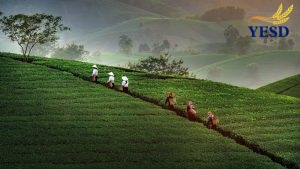
Winter is the best time to visit Ha Giang Loop if you value peaceful roads, fewer visitors, and a moody mountain atmosphere more than warm weather. Mornings can be misty, and limestone peaks may appear and disappear behind low cloud, creating a cinematic quality that many photographers enjoy.
The main drawback is the cold, particularly on exposed passes and during early-morning rides. Hà Giang city records its lowest average temperatures in January in the cited climate dataset, while higher elevations can feel considerably colder because of wind and damp conditions. Pack thermal layers, gloves, warm socks, and reliable rain protection rather than relying on a single sweatshirt.
Winter visibility can also be unpredictable. Delay your departure if dense fog makes the road difficult to read, and ask your homestay host or guide about current conditions before riding into the mountains. For a quieter and safer experience, an Easy Rider or guided tour can be a sensible option.
The best time to do the Ha Giang Loop for specific scenery
The ideal month changes depending on the landscape you want to see. Rice terraces are usually most impressive from September into early October, when fields may turn golden before harvest. Peach and plum blossoms are most likely from February to March, although flowering varies with altitude and yearly weather. Buckwheat flowers are commonly associated with October and November, but local timing can differ.
What is the worst time to ride the Ha Giang Loop?
There is no universally bad season, but July and August are generally the most demanding months for self-riding. Heavy rain can reduce traction and visibility, while sudden weather changes may lead to delays or route changes. This does not mean you must avoid the loop completely during summer; it means you should match the conditions to your experience and travel style.
If you are a beginner, uncomfortable riding in rain, or traveling with children, consider booking a guided trip or Easy Rider package. A local driver understands the route, can respond to changing road conditions, and allows you to focus on the scenery rather than navigating every wet corner yourself.
How to prepare for the Ha Giang Loop in any season
Pack for several types of weather, even if the forecast looks favorable. Lightweight layers, a waterproof jacket and trousers, gloves, sunscreen, comfortable closed shoes, and a dry bag are useful throughout the year. Temperatures can feel very different between the valleys and high passes on the same day.
Check conditions locally each morning. Online forecasts provide a useful overview, but accommodation hosts, guides, and drivers often know about recent fog, road damage, construction, or landslides before that information appears online.
Plan shorter riding days than you would on an ordinary road trip. The route is scenic precisely because it is mountainous, and you will likely want to stop frequently for viewpoints, photographs, meals, and village visits. Reaching your destination before dark is more important than completing an ambitious itinerary.
Finally, choose a tour style that matches your confidence. Independent riding offers flexibility, but it requires real experience on motorbikes and a realistic understanding of mountain roads. A guided tour or Easy Rider is often the better choice for travelers who want to enjoy the landscape without taking unnecessary risks.
Final verdict: What is the best time to do the Ha Giang Loop?
For the strongest overall combination of scenery, comfort, and riding conditions, choose late September to early November, with October as the best single month for many travelers. Visit in September or early October for golden rice terraces, October or November for buckwheat flowers, February or March for blossoms, and May to early June for vivid green landscapes.
Whenever you go, expect changing weather and allow your itinerary to remain flexible. The Ha Giang Loop offers a different experience in every season: flowering hills in spring, bright-green valleys in summer, golden terraces in autumn, and quiet mist in winter. Choose the best time to do the Ha Giang Loop that matches what you want to see, prepare properly, and book your Ha Giang Loop tour in advance during the busiest travel windows.