Phia Thap Village: Beautiful Hidden Craft Village in Cao Bang
Okay, real talk: everyone plans their Cao Bang trip around Ban Gioc Waterfall and Nguom Ngao Cave, and honestly, fair enough – they’re stunning. But somewhere between the mountain passes, I stumbled onto Phia Thap, and it quietly became one of my favorite stops of the entire trip. No grand monuments, no ticket booth, no “please stand here for the photo” sign. Just bundles of incense sticks drying in the sun and a village that’s been doing its own thing for generations. Let me tell you why Phia Thap deserves a spot on your itinerary.
Where Exactly Is This Village Located?
Phia Thap sits in Phuc Sen commune, on the route from central Cao Bang toward Quang Hoa and Trung Khanh. It’s about 35 km from the old Cao Bang city center, which means you can easily pair it with Ma Phuc Pass and Phuc Sen blacksmith village on the same trip.
Which Part of Cao Bang Is It In?
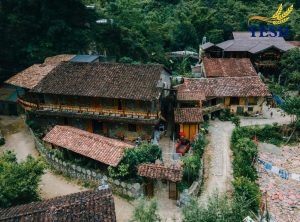
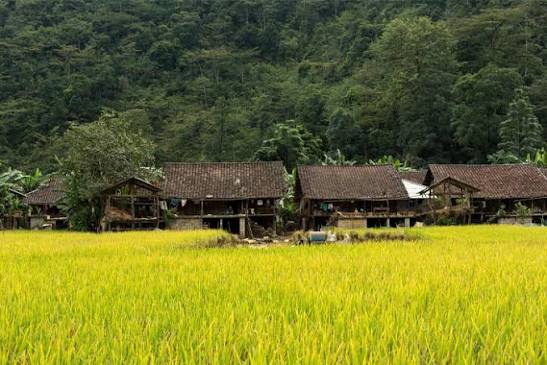
The village belongs to the Phuc Sen area, in the eastern part of Cao Bang province, home to many Nung communities and traditional handicrafts kept alive across generations. The scenery here is classic Northeastern Vietnam: limestone mountains, rice fields, and small clusters of houses. Phia Thap Village isn’t fenced off into some separate “tourist zone” – it’s still just where people live and work, which is exactly why it feels so refreshingly real.
How Far Is Phia Thap From Cao Bang City?
From the old Cao Bang city center, it’s roughly 35 km, usually a 45–60 minute ride by motorbike or car depending on road and weather conditions. If you’re heading toward Trung Khanh and Ban Gioc anyway, the incense village fits in perfectly as a cultural stop along the way instead of a separate trip.
| Starting Point | Approx. Distance | Estimated Time | Transport |
|---|---|---|---|
| Old Cao Bang City | ~35 km | 45–60 min | Motorbike/Car |
| Ma Phuc Pass | ~15 km | 20–30 min | Motorbike/Car |
| Phuc Sen | A few km | 10–15 min | Motorbike/Car |
What Makes Phia Thap Incense Village So Special?
Here’s the thing about this village – its charm isn’t in one big attraction. It’s in the way incense-making is woven right into the everyday life of the people who live there.
A Craft Village That’s Still, You Know, Actually a Village
This place is first and foremost a village where people live and work, not a set built for tourists. Small paths connect houses to rice fields, gardens, and workspaces, creating that cozy, unhurried mountain-village feel. Incense-making happens right inside people’s homes, mixed in with regular daily chores. Walking slowly through Phia Thap Village and just watching life happen is honestly more rewarding than hunting for one perfect photo spot.
The Bundles of Incense That Give the Village Its Look
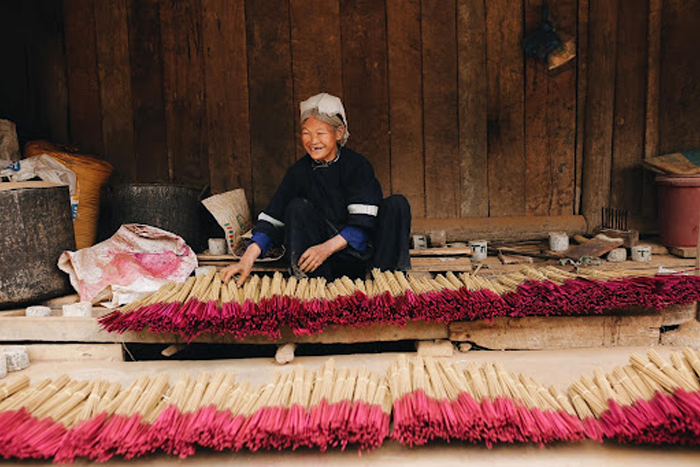
On a good production day, the most recognizable sight in Phia Thap incense Village is bundles of incense sticks and incense bases laid out neatly in front of homes. After certain steps, the incense is dried outdoors, creating bold splashes of color against the houses, paths, and mountain backdrop. In between, you’ll see villagers preparing materials, shaping incense, or gathering the dried product. How much incense you’ll actually see drying depends on the weather and each family’s schedule that day.
The Nung Culture Behind the Craft
The incense-making tradition here is deeply tied to the local Nung community. Skills are preserved and passed down through generations, creating both income and a living connection to local heritage. Every step requires real experience – choosing materials, handling them correctly, finishing the product just right. Getting to know Phia Thap isn’t just about watching incense get made; it’s a window into local labor, community life, and how a traditional craft survives in Cao Bang today.
How Long Has Incense-Making Existed Here?
The Nung community here has kept this craft alive across many generations. Some sources mention a history stretching back hundreds of years, though exact dates vary. Rather than pinning it to one fixed year, it’s more accurate to think of Phia Thap incense village as an old craft village where incense-making has simply become part of everyday life.
Traditionally, the skill was passed down within families – older generations teaching the younger ones how to prepare materials, shape the incense sticks, dry them, and recognize when a batch is ready. For many households, making incense is both a source of income and a way of honoring their ancestors’ craft. Life has changed over the years, but plenty of the handmade steps have stuck around, which is exactly what makes Phia Thap more than just a quick photo stop.
How Is Phia Thap Incense Made?
The incense-making process involves several handmade steps: preparing materials, splitting and shaving the sticks, coating them in incense powder, then letting everything dry naturally in the sun. One especially interesting detail: local Nung An artisans use natural ingredients, including bau hat leaves as a distinctive binding agent.
Preparing the Materials
Materials are chosen and processed separately for each stage. The incense sticks are usually made from mai wood or long-jointed bamboo; bau hat leaves are collected, dried, and ground into powder to act as the binder. The incense powder itself can include sawdust along with plant-based ingredients for scent and color. Using locally sourced natural materials is a defining feature of the craft here.
Shaping the Incense Sticks
Mai wood is cut into roughly 40 cm sections, then split into thin strips. Artisans carefully shave each strip until it’s straight, thin, and fairly round – a step that takes real skill, since the stick has to be delicate enough without snapping during the dipping and rolling stages that follow.
Building the Incense Body
The prepared sticks are dipped into a solution made from bau hat powder for stickiness, then rolled through the incense powder mixture. This dipping-and-rolling routine is repeated several times — some sources describe four rounds in the traditional method — with artisans twisting and shaking the sticks evenly so the powder coats them into a smooth, round shape.
Drying in the Sun
Instead of using an oven, incense in Phia Thap is dried naturally outdoors. Villagers use their yards, walls, and open ground to lay the sticks out under the sun. Drying time depends heavily on the weather – sunny days speed things up, while overcast skies stretch it out. This is also the moment when the fanned-out bundles create that iconic, instantly recognizable image of the village.
From raw material to finished bundle: Natural materials → Splitting and shaving the sticks → Dipping in binder → Rolling in incense powder → Natural sun-drying → Finished product.
What Can You Actually Do in Phia Thap Village?
Experiences here revolve mostly around the incense craft and everyday village life, rather than a checklist of separate attractions. This is a place for slow wandering, not rushing.
Watch Villagers Making Incense
If you time it right, you can watch multiple stages happening right in someone’s yard — splitting sticks, preparing materials, building the incense body, laying it out to dry. The appeal is seeing the real, unpolished process, not a staged demo put on for visitors.
Try a Few Steps Yourself
With the right timing and a friendly local guiding you, you might get to try a simple step or two of the process yourself. It’s a great hands-on way to understand why something that looks simple actually takes serious skill. Just don’t assume every visit includes a hands-on workshop – Phia Thap doesn’t run on a fixed activity schedule.
Wander the Village on Foot
Walking around shows you a much bigger picture of the place than the drying yards you usually see in photos. Small paths wind past homes, gardens, and rice fields, giving you a real feel for mountain village life and how the incense trade blends into everything else families do.
Photograph the Drying Yards
The incense bundles drying in front of homes are honestly a dream for photography lovers — the neat rows, the earthy tones, the mountains in the background. Just remember this is someone’s home and workspace: ask before photographing people directly, don’t wander into yards uninvited, and never move the incense around just to get a better shot.
Best Time to Visit
Unlike places famous for a specific rice-season or flower-season window, Phia Thap doesn’t really have one “perfect” season. If your main goal is watching incense dry outdoors, a clear, sunny day matters more than a specific month. The weeks before Tet tend to be especially busy, as production ramps up for year-end demand.
Dry Weather Means More Incense Outdoors
Since natural sun-drying is such a key step, weather directly affects what you’ll get to see. On sunny, low-humidity days, villagers happily bring incense outside to dry, and the natural light makes the colors pop for photos. On rainy or humid days, outdoor drying slows down or pauses altogether – so checking the forecast beats picking a season blindly.
Will You Always See the Whole Village Drying Incense?
Nope, and it’s worth setting expectations here. Those photos of every yard packed with drying incense create a certain expectation, but in reality, the amount on display shifts with weather, demand, and each family’s own schedule. Some days you’ll see plenty of activity; other days, less. Even without a dramatic drying scene, Phia Thap is still worth the stop for the craft and community itself.
How to Get to Phia Thap Village
From the old Cao Bang city center, follow Highway 3 toward Quang Hoa, pass through the Ma Phuc Pass area, and continue on to Phuc Sen to reach the village. It’s about 35 km, mostly done by motorbike or car.
By Motorbike
A motorbike is great for travelers who like exploring at their own pace. The route passes through gorgeous mountain scenery, with flexible stops possible at Ma Phuc Pass along the way. The main road is manageable, but expect some winding, hilly sections – slow down in rain or fog, and avoid riding after dark if you’re not familiar with the route.
By Car
A comfortable choice for families, groups, or anyone who’d rather skip motorbiking on mountain roads. Once you arrive, you’ll still want to walk a bit to properly take in the houses, drying yards, and village life. Traveling with a private car or driver also makes it easier to combine several stops without doubling back to the city each time.
With an Easy Rider
Perfect if you want the motorbike experience without doing the driving yourself. You ride behind an experienced local rider, still soaking up all the scenery, with the flexibility to stop at Ma Phuc Pass, Phia Thap, Phuc Sen, or keep going further. This is a solid option to consider if you’re planning a Cao Bang loop, especially if you’re not used to the local road conditions.
How Long Should You Spend Here?
Most visits to Phia Thap Village run about 1–2 hours, depending on whether you just want a quick look or want to really dig into the craft and daily life here. It’s not a sprawling attraction, so you don’t need to block out a full day.
| Visit Style | Suggested Time |
|---|---|
| Quick stop | 30–45 minutes |
| Village walk + watching incense-making | 1–1.5 hours |
| Photography/cultural deep-dive | 1.5–2 hours |
If you’re just passing through, 30–45 minutes is enough for a short walk and a peek at the drying areas if activity is happening. About 1–1.5 hours works better if you want to watch the process, chat with locals, and actually explore the village. Photography lovers or culture nerds (hi, that’s me) might happily spend up to 2 hours here.
Is Phia Thap Village Worth Visiting?
Phia Thap is worth it if you want your Cao Bang trip to include a bit more culture and everyday local life, not just scenery. That said, it’s not a must for every single itinerary – how much you’ll enjoy it really depends on your interests and how much time you have.
It’s a great fit if you love local culture and traditional craft villages, or if you’re into photography – the drying yards, houses, village paths, and daily activity all make for great, natural shots. It’s also a nice change of pace from Cao Bang’s usual highlight reel of waterfalls, caves, and rocky peaks.
On the flip side, if you only have 1–2 days and want to prioritize the big names like Ban Gioc Waterfall, Nguom Ngao Cave, Pac Bo, or Nui Mat Than, the village might not make the cut – and if you’re expecting a fully built-out tourist site with lots of organized activities, the experience here is intentionally simple.
So think of Phia Thap as a cultural stop along your route rather than a main destination. Its appeal comes from the craft, the people, and the pace of local life, not from scale.
What Can You Combine With Phia Thap Village?
This village fits best as part of an eastern Cao Bang route rather than its own separate trip. From the old city center, you can pair it with other stops toward Quang Hoa and Trung Khanh for a route that mixes craft villages with mountain scenery and big-name sights.
Phuc Sen Blacksmith Village
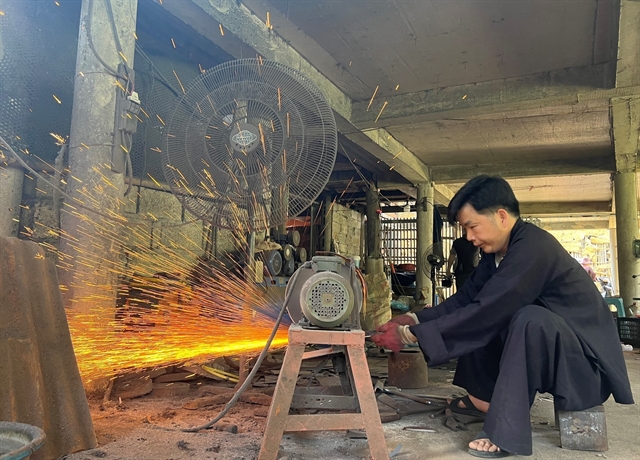
The most natural pairing if you’re into traditional crafts. While Phia Thap is known for incense-making, Phuc Sen is famous for handmade blacksmithing kept alive over generations. Visiting both shows two different ways local communities preserve traditional skills and make a living from handicrafts.
Ma Phuc Pass
On the route from the city toward this village, Ma Phuc Pass is a natural scenery stop. The pass runs through classic limestone mountain terrain, with spots to look down over the valley and winding road from above.
Nguom Ngao Cave and Ban Gioc Waterfall
If your route continues to Trung Khanh, Phia Thap can serve as a cultural stop before Nguom Ngao Cave and Ban Gioc Waterfall. This combo gives your day a nice contrast — from watching incense-making and village life to exploring limestone caves and finally waterfall views along the Quay Son river.
Other Traditional Craft Villages
If culture is really your thing, you could build an entire “craft village route” instead of treating this place as a standalone stop. Beyond incense-making and blacksmithing in Phuc Sen, the wider Quang Hoa area has other communities tied to their own local handicrafts.
Suggested Itinerary for Visiting
Phia Thap works best as a stop along a route rather than a full-day destination. About 1–2 hours is enough to properly experience the craft while still leaving room for other stops the same day.
If You’re Only Visiting for the Day
A solid route from the old Cao Bang city center looks like this:
Old Cao Bang City → Ma Phuc Pass → the village → Phuc Sen → continue your journey
Stop briefly at Ma Phuc Pass for the views, then spend around 1–1.5 hours at this village walking around and watching incense-making if the timing works out. From there, head to Phuc Sen blacksmith village to see a different local craft. Head back to Cao Bang if you’re done for the day, or keep going toward Trung Khanh if time allows.
As Part of a Longer Cao Bang Trip
For multi-day trips, it’s worth slotting Phia Thap village between the bigger natural landmarks to keep things varied. For example, on a day traveling from Cao Bang toward Ban Gioc, you could stop at Ma Phuc Pass, Phia Thap, and Phuc Sen before continuing on to Trung Khanh.
This kind of pacing takes you from mountain-pass scenery to craft-village culture, then on to Nguom Ngao Cave and Ban Gioc Waterfall. If you’ve got around three days, it’s worth building this stop into a full Cao Bang itinerary so you can balance it against the region’s main highlights without overloading a single day.