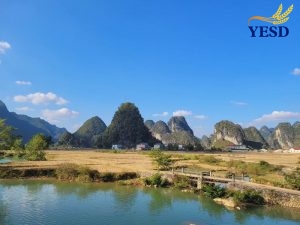
Okay, so here’s a fun fact I did not expect to learn on a motorbike trip through northern Vietnam: the ground under Ma Phuc Pass used to be an active seafloor volcano. Like, 260 million years ago, underwater-volcano level ancient. I went in expecting pretty mountains and left with a whole geology lesson, a tragic-but-beautiful legend, and a genuine soft spot for this stretch of road. Ma Phuc Pass Cao Bang isn’t just a stop on the way to Ban Gioc – it’s basically the opening act that tells you exactly what kind of magic this province has in store.
What Is Ma Phuc Pass Cao Bang?
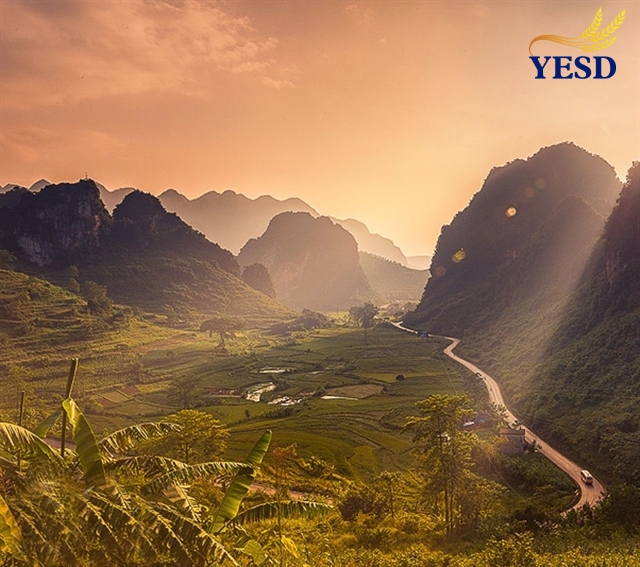
Ma Phuc Pass is a winding mountain road along National Highway 3, sitting right in Cao Xuyen hamlet, Quoc Toan commune, in Cao Bang province. It’s one of the very first big “whoa” moments most travelers hit heading east out of Cao Bang city, and it more than earns the hype.
Where Exactly Does Ma Phuc Cao Bang Sit?
Ma Phuc Pass sits at the meeting point of the districts that split off from the old Tra Linh and Quang Hoa boundaries, right on the route heading toward the province’s eastern highlights. However your map labels the district lines, the pass itself is unmistakable: two towering limestone ridges rising on either side of the road like they’re mid-conversation.
How Long and How High Is Ma Phuc Pass?
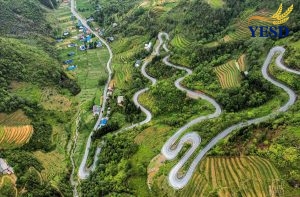
The pass runs just over 3.5 km and climbs to roughly 700 meters above sea level, winding through seven dramatic tiers of switchbacks. Steep drop on one side, sheer rock face on the other – Ma Phuc Pass is not subtle about being a mountain pass.
The Underwater Volcano Secret of Ma Phuc Pass
This is the part that genuinely surprised me, and it’s not something most people mention when they talk about Ma Phuc Cao Bang.
Pillow Basalt: Proof This Was Once the Seafloor
At the base of Ma Phuc Pass lies a genuinely unique geological heritage site. Around 260 million years ago, this area sat beneath the sea, with volcanoes erupting on the ocean floor. When that lava hit the cold seawater, it cooled instantly and stacked up into rounded, pillow-shaped blobs of rock – appropriately called “pillow lava” or pillow basalt. At the point where this dark, rounded rock meets the pale limestone, you can actually see the contrast with your own eyes.
Why Geologists Love Ma Phuc Pass
Underwater volcanic activity like this still happens today, mostly along deep ocean ridges, though a few systems sit in shallower water too. Scientists estimate over a million submarine volcanoes are active around the world right now. So when you’re standing on Ma Phuc Pass, you’re technically standing on a 260-million-year-old piece of ancient seafloor. Not something you expect to hear on a scenic motorbike stop, but here we are.
The Legend Behind Ma Phuc Pass
You can’t really talk about Ma Phuc Pass Cao Bang without getting into the legend, because it’s honestly one of the more moving stories I’ve heard attached to a mountain road.
The Warrior Nung Tri Cao
In the 11th century, a Tay leader named Nung Tri Cao led local resistance against the Song dynasty to the north. He eventually rose to lead an uprising, took territory that now sits in China’s Guangdong and Guangxi provinces, and proclaimed himself king. It’s genuinely epic, underdog-turned-ruler stuff.
The Kneeling Horse That Named the Pass
Here’s the part that gets me every time: after roughly three years of rule, Nung Tri Cao was defeated by the Song dynasty. On his way back from patrolling the border, he reached this same steep, winding pass — and his horse, utterly exhausted, collapsed and couldn’t go on. That’s the moment that gave the nearby mountain the name “An Lai” and the pass itself the name “Ma Phuc,” which literally means “kneeling horse.” Every time I ride through, I think about that poor, tired horse, and somehow it makes the whole place feel even more alive.
Why Ma Phuc Pass Cao Bang Is Such a Big Deal
Between the geology and the legend, Ma Phuc Pass has more depth than your average scenic overlook — and its reputation backs that up.
The First Stop of the Non Nuoc Cao Bang Geopark
Ma Phuc Pass is considered the first stop on the eastern route of the Non Nuoc Cao Bang UNESCO Global Geopark, covering districts like Tra Linh, Quang Uyen, Trung Khanh, Ha Lang, and Phuc Hoa. In other words, this isn’t just a pretty road — it’s an official gateway to a whole region of natural and cultural treasures.
One of Cao Bang’s Most Photogenic Passes
Between the layered limestone cliffs, the green rice and corn fields at the base, and the little stone-walled villages tucked along the road, Ma Phuc Pass consistently ranks among the most beautiful passes in Cao Bang. And that’s before we even get to the mountaintop market.
The Ma Phuc Market: Culture at 700 Meters
Honestly, this might be my favorite part of the whole Ma Phuc Pass experience, and it’s easy to miss if you don’t plan around it.
When Does the Market at Ma Phuc Pass Happen?
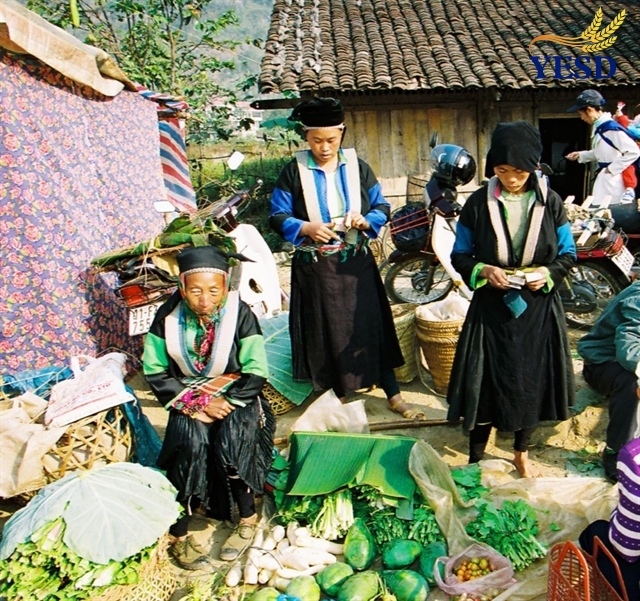
The market at the top of Ma Phuc Pass runs on a five-day cycle, landing on the 3rd and 8th of each lunar month (so also the 13th, 18th, 23rd, and 28th). Tay, Nung, and Dao communities from surrounding villages hike up with goods slung over their shoulders to trade at the top.
What You’ll Find at the Market
Expect roasted Trung Khanh chestnuts, hand-forged knives and farming tools from Quang Uyen, fresh chickens, pigs, bamboo shoots hauled in from all five surrounding districts, and beef from the villages right at the base of the pass. There’s also singing — young locals often break into Sli folk singing in the misty air, which is honestly one of the most charming things I’ve witnessed on any Cao Bang trip.
Best Time to Visit Ma Phuc Pass
Late in the year tends to be the sweet spot for visiting Ma Phuc Pass. The weather cools down, the air turns crisp, and the landscape around the pass hits its most photogenic stretch of the whole year.
Buckwheat and Wild Sunflowers
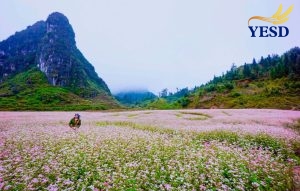
Toward the end of the year, buckwheat flowers bloom across the fields near Ma Phuc Pass, and wild sunflowers (dã quỳ) line the roadsides in bright, unmissable yellow. Combined with the layered mountains, it’s about as close to a real-life painting as a mountain pass gets.
How the Pass Changes Throughout the Day
Even within a single day, Ma Phuc Pass shifts its whole personality. Early mornings and just after sunset often bring in a soft, drifting mist that makes the whole scene feel dreamy and a little mysterious. Once the mist burns off, the sky turns bright blue with clouds hanging over the peaks, and everything suddenly feels wide awake and breezy.
How to Get to Ma Phuc Pass
Reaching Ma Phuc Pass is genuinely straightforward, since it sits right along the main road heading into Cao Bang’s eastern loop.
By Plane, Then Road
If you’re coming from further away, fly into Noi Bai Airport, then continue by taxi or bus up to Cao Bang city before heading out toward Ma Phuc Pass.
By Bus From Hanoi
A direct bus from Hanoi to Cao Bang runs roughly 300,000–400,000 VND, a solid budget option if you’d rather not drive the whole way yourself.
By Motorbike
Starting from Hanoi, you can ride north along National Highway 3 straight to Cao Bang and continue on to Ma Phuc Pass. Just know the road through the pass itself is winding and steep, so keep your full attention on the curves, not just the view.
With an Easy Rider
My personal favorite way to experience Ma Phuc Cao Bang: let an experienced local rider handle the switchbacks while you sit back, enjoy the scenery, and ask them everything about the kneeling-horse legend.
What to Combine With Ma Phuc Pass
Since Ma Phuc Pass sits right at the start of the eastern Cao Bang route, it pairs naturally with a handful of other unmissable stops.
Nam Tra Hollow Mountain
Not far from the pass, this hollow mountain in Quoc Toan commune makes for a fun short hiking detour if you’ve got extra time.
Phia Thap Incense Village
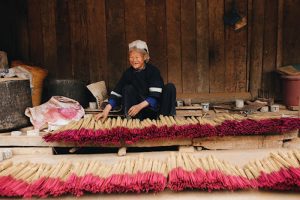
A short ride from Ma Phuc Pass, this Nung village is known for handmade incense, with bundles drying in the sun right outside people’s homes.
Pac Rang Blacksmith Village (Phuc Sen)
Another easy add-on near Ma Phuc Pass, where traditional blacksmithing has been passed down for generations.
Khuoi Ky Stone Village
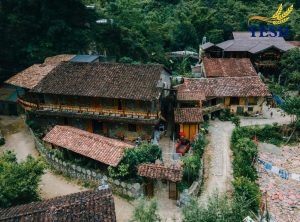
A charming Tay stone-house village that’s great for a homestay stop and trying local specialties.
Nguom Ngao Cave and Ban Gioc Waterfall
For travelers continuing on, Ma Phuc Pass often marks the start of the day’s journey before reaching the dramatic limestone caves at Nguom Ngao and the show-stopping Ban Gioc Waterfall.
Thang Hen Lake
Tucked between mountains and forest, Thang Hen Lake is a peaceful spot to paddle a boat or camp with friends after a day exploring Ma Phuc Pass.
Practical Tips for Visiting Ma Phuc Pass
- Check the weather first. Heavy rain or thick fog can make the switchbacks genuinely risky, so plan around clear conditions.
- Make sure your ride is road-ready. If you’re self-driving, check your tires and basic gear before tackling Ma Phuc Pass.
- Know the road ahead of time. The curves here demand real riding skill, so don’t underestimate this stretch.
- Build in extra time. Ma Phuc Pass tends to eat up more time than expected, between photo stops and market browsing.
- Pack water and snacks. Convenient stops are limited along the mountain road, so come prepared.
- Time it around market days (the 3rd, 8th, 13th, 18th, 23rd, or 28th of the lunar month) if you want the full local experience.
Final Thoughts: Is Ma Phuc Pass Worth the Stop?
Absolutely, without question. Ma Phuc Pass Cao Bang manages to pack ancient underwater volcanoes, a genuinely touching legend, a lively mountaintop market, and some of the best scenery in the whole province into one 3.5 km stretch of road. It’s proof that the “in-between” stops on a trip are sometimes the ones that stick with you the longest. So slow down, hop off the bike, grab a roasted chestnut, and let Ma Phuc Pass do its thing.
After exploring Ma Phuc Pass, why not discover more of the region? Read our Cao Bang Loop guide for more places to visit and experiences to add to your trip.