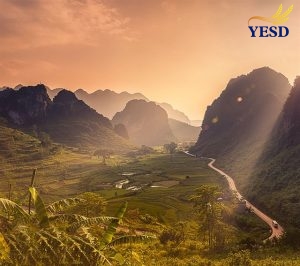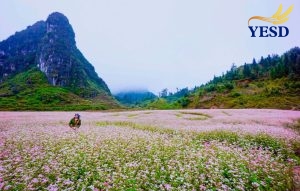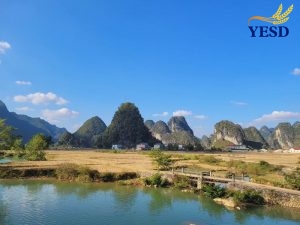
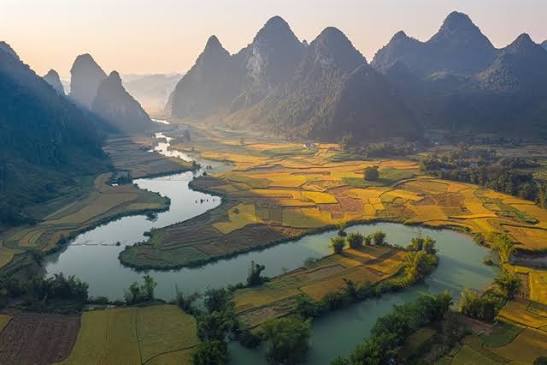
Right, let’s talk about the Quay Son River, because honestly, this one flies way under the radar compared to its famous neighbour, Ban Gioc Waterfall. But mate, the Quay Son River deserves its own spotlight. Jade-green water, rice fields swaying on either side, limestone mountains standing guard in the background – it’s the kind of scene that makes you forget to check your phone for a solid hour. If you’re planning a Cao Bang trip with us at Cao Bang Loop, this peaceful river should be firmly on your list, not just a blur you catch on the way to the waterfall.
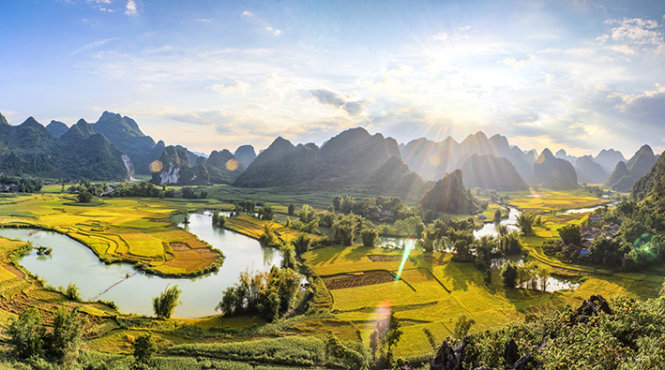
Where Exactly Is the Quay Son River?
The Quay Son River winds through the northeastern border region of Vietnam, with one of its most scenic stretches passing through Trung Khanh District in Cao Bang Province. It’s particularly well known because of its connection to Ban Gioc Waterfall. The calm water flowing between fields and villages eventually reaches the falls, where the landscape suddenly becomes far more dramatic.
Not Just One View, But Heaps of Them
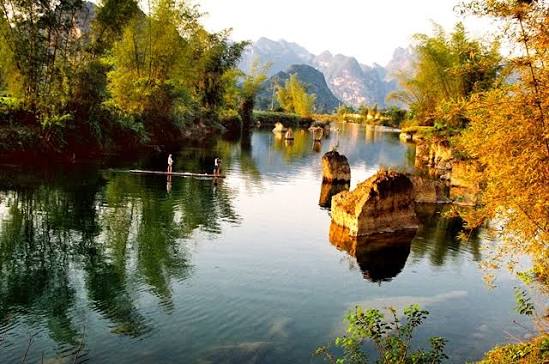
Here’s the thing about the Quay Son River: it doesn’t do just one look. Cruising through the fields, it’s soft and calm. Getting closer to the limestone mountains, it turns a bit wilder and more rugged. You genuinely get several completely different vibes from the same river depending on where you catch it.
From China’s Guangxi to Vietnam’s Border
In Sino-Vietnamese, “Quay Son” roughly translates to “river that flows around the mountain,” and it’s also sometimes called Que Son River or Quy Xuan River. The river actually starts up near Jingxi County in China’s Guangxi Zhuang Autonomous Region, then crosses into Vietnam near border marker 784, close to the Po Peo border gate in Na Han hamlet, Ngoc Con commune, Trung Khanh district. From there, the Quay Son River flows south toward Dinh Phong, curves east-northeast toward Dam Thuy, then swings southeast until it reaches Ban Gioc – where it also happens to form a natural border between Vietnam and China. Pretty wild for one river to pull double duty like that.
Best Time to Visit the Quay Son River
There isn’t really one perfect season to visit. The landscape changes throughout the year, and each version has its own charm.
The Lush Green Months
During the growing season, the rice fields turn a vivid green. Paired with blue-green water and limestone mountains in the background, the whole valley feels incredibly fresh and alive.
The Golden Rice Season
When the rice ripens, the scene flips completely – golden fields against green mountains and that same jade river, which is an absolute treat if you’re into photography.
Around August and September
Some local guides reckon August and September hit the sweet spot for the Quay Son River specifically, since the weather tends to be cooler, drier, and easier to get around in, and the nearby waterfalls are looking their absolute best too. Just know that mountain weather can be unpredictable, so it’s worth checking the forecast before you lock in your Quay Son River day.
What Can You Actually Do at the Quay Son River?
Sometimes the best experience here is dead simple: slow down and enjoy the scenery.
Soaking In the View
Instead of rushing to tick off ten spots in one day, find a nice open stretch along the Quay Son River and just take it in – rice fields, limestone backdrops, and little riverside villages all make for a genuinely stunning frame.
Getting on the Water
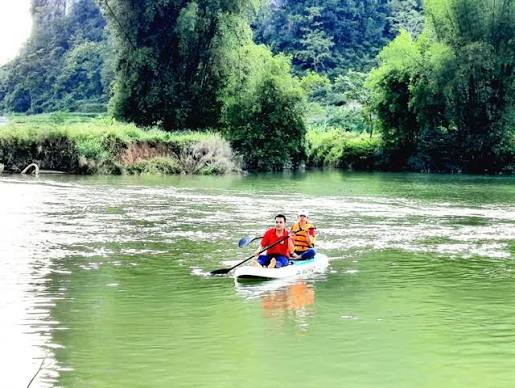
If you’d rather be IN the scenery than just looking at it, you can hop on a kayak or paddle a SUP board right on the Quay Son River – some nearby homestays hire them out. There are also small motorboat rides available if you’d rather sit back and let someone else do the paddling while you take photos.
Photography Along the River
You honestly don’t need loads of props here – the Quay Son River does the heavy lifting on its own. Shots that show the river winding deep into the valley tend to capture its character best.
Getting to Know Local Life
If you’ve got the time, slow down and take in how local life connects to the river – farming, daily routines, riverside communities. It turns your trip from “pretty photos” into something that actually sticks with you.
What to Combine With a Quay Son River Trip
One of the best things about the Quay Son River is how easily it slots into a bigger Cao Bang itinerary – which, coincidentally, is exactly what our Cao Bang Loop routes are built around.
Ban Gioc Waterfall
Basically unmissable. This is where the Quay Son River shows off its wilder, more powerful side, and it’s one of the most photographed spots in all of Cao Bang – reportedly one of the largest waterfalls in Southeast Asia sitting right on a national border.
Nguom Ngao Cave
A short hop from the Quay Son River, this cave is packed with dramatic stalactite formations. Going from open riverside scenery to a moody underground cave in the same day is a genuinely good contrast.
Khuoi Ky Ancient Stone Village
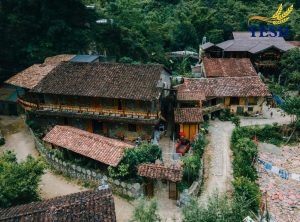
Stone houses, stone fences, and a totally different side of Trung Khanh life – well worth a stop near the Quay Son River.
Phat Tich Truc Lam Ban Gioc Pagoda
Not far from the river, this pagoda was the first of its kind built right on Vietnam’s northern border – a nice, calm addition if temples are your thing.
Nui Mat Than, Thang Hen Lake, and Pac Bo
If you’ve got a few more days up your sleeve, extend your route from the Quay Son River out to these other Cao Bang classics for the full loop experience.
Practical Tips for Visiting the Quay Son River
Getting There
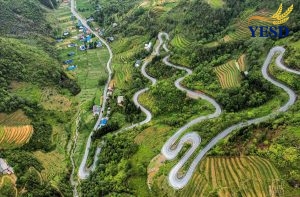
From Cao Bang city, head southwest along National Highway 3, turn onto Provincial Road 206, and continue straight to Dam Thuy – you’ll spot the Quay Son River Community Tourism Area on your left. It’s roughly 80 km, with a few proper winding mountain sections, so keep your wits about you if you’re self-driving (or let one of our Cao Bang Loop drivers handle it while you enjoy the view).
What to Wear
Comfy clothes are the go, especially if your day involves walking near the fields or riverbanks. Solid grip on your shoes helps heaps when the ground near the Quay Son River gets a bit uneven or damp.
Best Light for Photos
Morning and late afternoon generally give you the softest light across the valley. Just remember that mountain roads become more difficult after dark, so leave enough time to reach your accommodation safely.
Respect the Area
Don’t wander into rice fields, working areas, or people’s homes just for a photo. Keep your rubbish with you and leave the place exactly as you found it – the Quay Son River deserves that much.
Is the Quay Son River Worth Visiting?
If you’re after buzzing theme parks and nightlife, fair warning: the Quay Son River isn’t that kind of destination. But if you’re into nature, mountain scenery, and travel that’s more about the experience than the itinerary checklist, it’s a proper ripper of a stop.
The charm of the Quay Son River doesn’t come from some flashy man-made attraction. It comes from how the river just exists within the landscape – soft beside the rice paddies, quiet next to the villages, then powerful the moment it becomes Ban Gioc Waterfall. That’s probably why, long after the trip’s over, what people remember about Cao Bang isn’t just one single sight – it’s the road through the mountains, the fields in the valley, and that same green river winding endlessly through the borderlands.
Explore the Quay Son River With Cao Bang Loop
If all this has got you keen to see the Quay Son River for yourself, that’s exactly what our team builds trips around. Check out our full Cao Bang routes at caobangloops.com and let’s get you out there — no worries at all.