Okay, I’ll admit it — I went to northern Vietnam expecting Ha Giang to steal my heart, and then the Cao Bang Loop showed up out of nowhere and just… took it. Rudely. Without asking. If you’re planning a motorbike trip and you’re tired of sharing every viewpoint with fifty other selfie sticks, grab your helmet, because I’m about to tell you why this loop deserves a permanent spot on your Vietnam bucket list.
Book your Cao Bang Loop Tour here!
Why I Fell Head Over Wheels for the Cao Bang Loop
Here’s the thing about Cao Bang: it has all the drama of Ha Giang — the cliffs, the karst mountains, the “wow, did I really just ride that?” moments — but with about a tenth of the crowds. I spent entire mornings on empty roads with nothing but rice fields, water buffalo, and my own questionable singing for company. If you want scenery without the tour-bus traffic jam, this is your loop.
A UNESCO Geopark Playground (No Big Deal, Just 500 Million Years in the Making)
The whole route sits inside the Non Nuoc Cao Bang Global Geopark, and I like to remind myself of that every time I’m huffing and puffing up a mountain pass — I’m basically riding through a 400 to 500-million-year-old rock formation. Makes my sore legs feel a little more poetic. Between the limestone cliffs, hidden caves, and river valleys, every bend in the road feels like it was designed specifically to make you gasp.
Waterfalls So Big They Need Two Countries
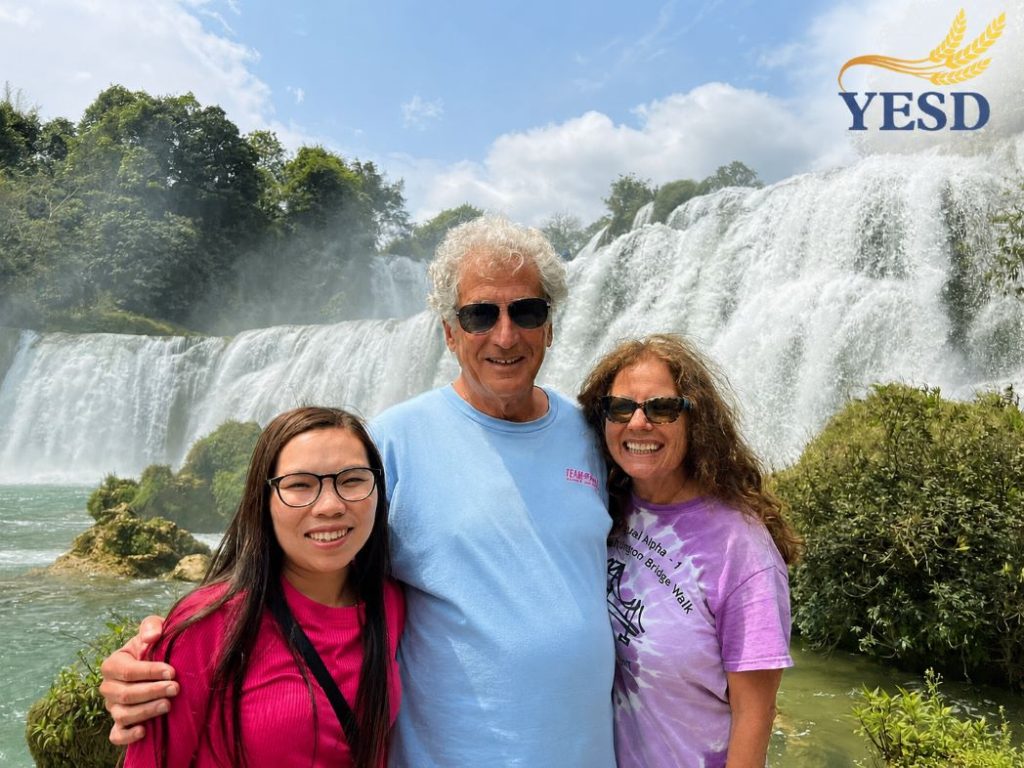
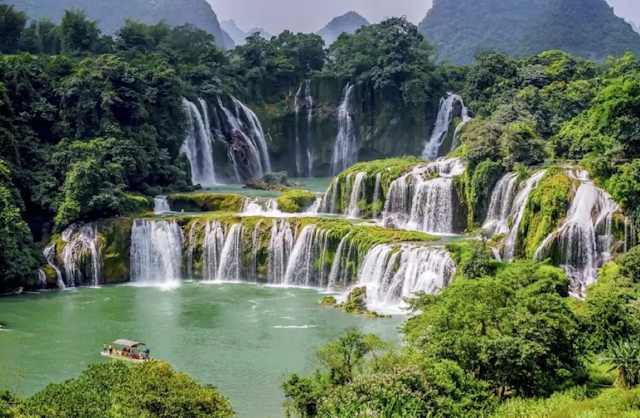
Ban Gioc Waterfall is the headliner here, and honestly, it earns the hype. It’s the largest waterfall in Vietnam, spans nearly 300 meters, and straddles the Vietnam-China border, which means you get to say you’ve stood in front of an international waterfall like some sort of geography flex at your next dinner party.
Real Local Culture, Not a Tourist Trap in Sight
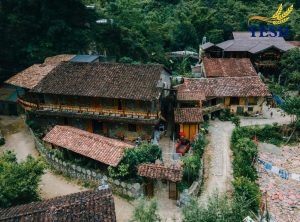
Because Cao Bang hasn’t been “discovered” in the Instagram sense yet, the villages you pass through feel genuinely lived-in rather than staged for tourists. You’ll ride through Tay, Nung, Hmong, and Lo Lo communities, and if you stop in Phuc Sen, you can watch blacksmiths still forging tools the traditional way. No performance, no gift shop at the end — just real life happening around you.
When to Ride the Cao Bang Loop (Timing Is Everything, Folks)
I learned the hard way on a different trip that showing up in the wrong season can turn “epic adventure” into “mud-caked regret.” So let’s get your timing right.
Golden Season: September to November & March to April
These are your money months. Dry roads, safer riding conditions, and if you time it for September or October, the rice fields in Phong Nam Valley turn this unreal golden yellow that makes every photo look professionally staged (it isn’t, I promise, that’s just Cao Bang showing off).
The Rainy Wild Card: June to August
Want Ban Gioc Waterfall at its most powerful, thundering, “get-out-of-my-way” dramatic best? Come in summer. Just know you’re trading postcard-perfect roads for slippery mud, occasional landslides, and rain gear that will become your new best friend.
Best Time of Day to See Ban Gioc Waterfall
Here’s my insider tip: aim for 10:30 AM to 1:00 PM. An upstream dam releases extra water during this window, so the falls hit peak flow right when you’re standing there. If you’re more into soft morning light and fewer people photobombing your shots, get there before 10:00 AM instead.
Getting There: Hanoi to Cao Bang Loop
The Overnight Sleeper Bus Experience
Most people (myself included) hop on an overnight sleeper bus from Hanoi’s My Dinh or Gia Lam stations, departing around 8 to 9 PM and rolling into Cao Bang City by 5 to 7 AM. Is it glamorous? Not really. Is it
efficient? Absolutely — you sleep through the boring part and wake up ready to ride.
What It’ll Cost You
Expect to pay somewhere between 400,000 and 700,000 VND (about $16 to $28 USD), depending on the bus company and seat type. Cheap enough that you won’t cry about it, comfortable enough that you’ll actually sleep.
Choosing Your Ride: Self-Drive or Easy Rider Royalty
Self-Drive: For the Brave and Slightly Reckless
If you’ve got motorbike experience, an international driving license and a taste for mountain roads, self-driving is where the real fun happens. Just make sure you’re actually confident, not “I watched a YouTube video once” confident.
Best Bikes for the Job
For serious mountain terrain, the Honda XR150L is the crowd favorite at around 500,000 VND per day. Sticking mostly to paved roads? A Honda Air Blade (around 300,000 VND/day) or semi-automatic Honda Future (around 300,000 VND/day) will treat you just fine.
Easy Rider: Sit Back, Relax, Let Someone Else Deal With the Mountain
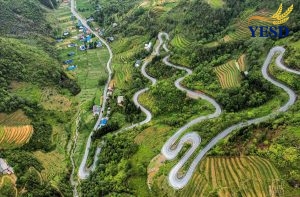
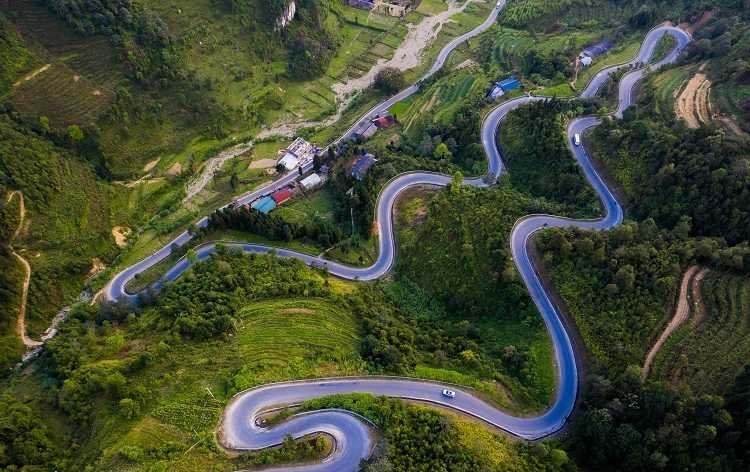
No International Driving Permit? Not confident on winding roads like the Ma Phuc Pass below? Or just want to enjoy the view without white-knuckling the handlebars? An Easy Rider tour puts an experienced local driver in charge while you play tourist in the back seat. Easy rider ensures you can fully enjoy the view with a peace of mind, if you ask me.
Book your Cao Bang Loop Tour here!
Packing Tips That’ll Save Your Back (and Your Bike)
Leave the giant suitcase at your homestay — most rental shops offer luggage storage. Pack light in a 15 to 20 liter backpack, toss it in a dry bag, and strap it down tight. Your spine (and your bike’s balance) will thank you.
The Perfect 4-Day Cao Bang Loop Itinerary
Day-by-Day Highlights: Ban Gioc, Nguom Ngao Cave, and Angel Eye Mountain
The whole route loops through eastern Cao Bang like it was drawn by someone who really wanted you to see everything without breaking a sweat. Ban Gioc Waterfall, Nguom Ngao Cave, and Angel Eye Mountain all sit within easy reach of each other, so you’re never stuck doing a marathon ride just to hit the next highlight.
Daily distances stay short and sweet, which means you can stop for photos, coffee, or just to stare at a mountain for ten minutes without a schedule breathing down your neck. Honestly, it’s one of the most forgiving loops out there — perfect if it’s your first time riding in Vietnam, you’re traveling as a couple, or you just want an adventure that doesn’t require nerves of steel.
This particular version — 4 days, 3 nights — takes you from Hanoi all the way through Nguom Ngao Cave, Ban Gioc Waterfall, Phat Tich Pagoda, the Ha Lang grass hills, Phia Thap incense village, Phuc Sen forging village, Holy Eye Mountain, and Cao Bang City, before delivering you safely back to Hanoi. Here’s how it all unfolds.
Day 1: Hanoi → Nguom Ngao Cave
Your guide and driver will swing by your hotel at 7:30 AM, so have your coffee ready — this is a long drive day. We’ll head north toward Trung Khanh district, hugging the Vietnam–China border, and make our first big stop at Nguom Ngao Cave. Walking through a cave that’s been quietly forming for 300 million years has a funny way of putting your Monday deadlines into perspective. We’ll spend the night at a cozy local homestay right there in Nguom Ngao.
Day 2: Ban Gioc Waterfall → Phat Tich Pagoda → Ha Lang Grass Hills
After breakfast, get ready for one of the best mornings of the whole trip: a boat ride right up next to Ban Gioc Waterfall, one of the largest waterfalls on the planet and easily the star of this itinerary. Watching over 300 meters of water crash down along the Vietnam–China border is one of those moments where everyone on the boat goes quiet for a second.
From there, we’ll visit Phat Tich Truc Lam Ban Gioc Pagoda, the very first pagoda built in this far-flung corner of Vietnam. Opened back in December 2014 and tucked against Phia Nham Mountain just 500 meters from the waterfall, it’s a peaceful stop with serious views.
Next up, the Ba Quang Grass Hills in Ha Lang district — picture rolling fields shifting from green to gold to a fiery orange, like the landscape itself is putting on a slow sunset show. We’ll head back to our homestay in Nguom Ngao afterward for a second cozy night.
Day 3: Nguom Ngao → Phuc Sen Forging Village → Phia Thap Incense Village → Holy Eye Mountain → Cao Bang City
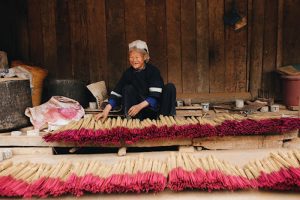
Fuel up on breakfast, because today’s a cultural deep-dive. We’ll stop first in Phia Thap Village, where the Nung ethnic community still hand-crafts incense using techniques passed down for centuries — it’s the kind of quiet, unglamorous tradition that makes a trip feel real.
From there, we roll into Phuc Sen Village, home to blacksmiths whose craft dates back to the 10th and 11th centuries, when local artisans forged weapons for Nung Ton Phuc and Nung Tri Cao’s fight against the Song army. Watching sparks fly from centuries-old techniques never gets old.
Before rolling into Cao Bang City, we’ll make one more stop at Mat Than, also known as Holy Eye Mountain — the local Tay people call it “Phja Piót,” which roughly translates to a mountain with a hole punched clean through it, as if the wind decided to carve its own shortcut. It’s mystical, it’s Instagram gold, and it’s the perfect final stop before we settle in for the night in Cao Bang City.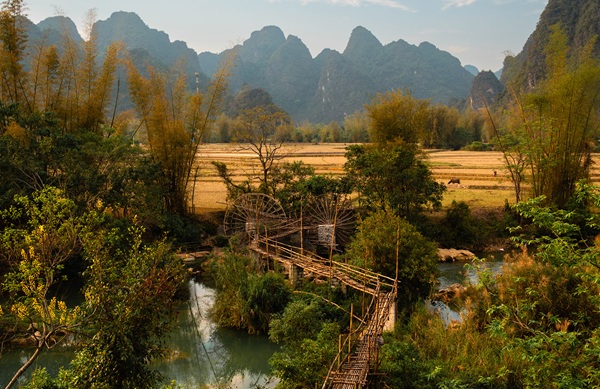
Day 4: Cao Bang City → Hanoi
After a relaxed breakfast, it’s time to point the wheels back toward Hanoi. Don’t worry, your guide will build in a proper leg-stretch break along the way, because nobody wants to sit still for that long. We’ll roll back into Hanoi and drop you at your hotel around 5:30 PM, officially wrapping up your Cao Bang adventure — tired, happy, and probably already planning your next one.
How Much Does the Cao Bang Loop Actually Cost?
Everyday Costs You’ll Actually Encounter
- Ban Gioc waterfall entrance: 50,000 VND
- Nguom Ngao cave entrance: 45,000 VND
- Local meals: 130,000–160,000 VND
- Tourist restaurants: 180,000–250,000 VND
- Dorm bed: 250,000–300,000 VND
- Private homestay room: 400,000–600,000 VND
And honestly? The best parts of this trip — sunsets over limestone peaks, cruising through river valleys — don’t cost a single dong.
Safety Tips and Insider Secrets (Read This Before You Rev That Engine)
Rules of the Road
Skip the drone at Ban Gioc — it sits right on the China border, and authorities won’t hesitate to confiscate it. Always carry a valid International Driving Permit (IDP 1968); riding without one can void your travel insurance even if the police never stop you. Use engine braking on steep descents instead of riding your brakes into oblivion, watch for wandering livestock around blind corners, and slow way down after rain. And please, for the love of all things scenic, avoid riding after dark — poorly lit roads plus fog plus wildlife is not a combo you want.
Book your Cao Bang Loop Tour here!
Fuel, Cash, and Other Practical Must-Knows
Fuel stations are easy to find in Cao Bang City, Tra Linh, Trung Khanh, and Quang Uyen, generally open until around 10 PM — but they get scarce once you head into remote valleys. My rule: top off whenever you pass a town, especially before heading toward Angel Eye Mountain, Phong Nam Valley, Ngoc Con Valley, or Ba Quang Grass Hill. Also, download offline maps (Maps.me tends to beat Google Maps out here) and carry cash, since plenty of homestays and small shops don’t take cards.
Final Thoughts: Why the Cao Bang Loop Deserves a Spot on Your Vietnam Bucket List
Look, Ha Giang will always get the headlines, and fair enough — it’s spectacular. But the Cao Bang Loop is the friend who doesn’t need the spotlight to be unforgettable: giant waterfalls, ancient caves, golden rice valleys, and villages that feel refreshingly untouched by mass tourism. Whether you’re a confident self-driver or you’d rather let an Easy Rider handle the hairpin turns while you soak in the view, this loop delivers big scenery without the big crowds. So download your offline maps, pack light, and go find out why I still can’t stop talking about it.
Book your Cao Bang Loop Tour here!