Hi, I’m Trissa, and I need to confess something: I went into northern Vietnam fully convinced Ha Giang would be the trip’s main character. Then Cao Bang crashed the party with its waterfalls, its emerald rivers, and its complete refusal to be crowded, and honestly? I haven’t shut up about it since. Grab a coffee, because I’m taking you through exactly how my Cao Bang Loop adventure with YESD Travel went down — bumps, belly laughs, and all.
Book your Cao Bang tour with YESD here!
Introduction
Let’s start with the basics, because I definitely had to Google this before I booked anything. Cao Bang sits way up in the far northeast of Vietnam, hugging the Chinese border, roughly 280 km from Hanoi. It’s the region’s biggest city, but don’t let “biggest” fool you — it still has that cozy small-mountain-town energy where everyone seems to know everyone. The town itself straddles the Song Bang River, which splits at one point and forms a little “island” connected to the mainland by a thin strip of land. That island is basically where the magic happens — all the best food, markets, and guesthouses are packed onto it.
Getting Myself (And My Nerves) to Cao Bang
The Long Bus Ride From Hanoi
I’m not going to lie to you — according to my research, the bus from Hanoi’s Old Quarter takes anywhere from six to seven hours depending on traffic and road conditions. It’s a commitment. But honestly, I used the time to nap, snack, and mentally prepare for the mountain views I had absolutely no idea were coming.
Coming From Ha Giang Instead
If you’re doing the classic northern Vietnam circuit and coming from Ha Giang, there are direct buses that’ll get you to Cao Bang, or you can brave the ride yourself. Fair warning: Google says five to six hours, but on winding mountain roads, “Google says” is more of a suggestion than a promise.
Why I Chickened Out of Renting My Own Bike (And Called YESD Travel Instead)
Here’s my truth bomb: at the time, I hadn’t done much motorbike riding, and CaoBang’s roads — while wide and well-paved — are just as steep as anything you’ll find on the famous Ha Giang Loop. The region is remote, the mountain roads are quiet, and quiet is a lovely word right up until you’re the only one who can call for help. So instead of white-knuckling my way through hairpin turns, I reached out to YESD Travel. It’s a responsible company, who commits to spend part of their company’s profit to support the local communities- building houses, training and hiring local tour guides — money incredibly well spent imo.
Our drivers listened to exactly what we wanted, tailored the route to us and stopped at random beautiful places when I requested. Since it was just me, a solo female on the tour, I felt somewhat worry about the safety, but my tour guide actually made me feel at ease during the entire trip.
How Easy It Was to Book
We WhatsApp-ed back and forth, told them exactly what we wanted to see, and they threw in a few suggestions of their own. We landed on a 4-day trip from Hanoi, with YESD organizing everything, the car drivers, tour guides homestays, itinerary, etc. All I had to bring was my sense of adventure (and sunscreen).
Why We Booked on the Spot
YESD sent over suggestions, we built out an itinerary together, and just like that, we 4 full days of mountain driving lined up. Having someone else handle everything meant I got to actually look up from the road and enjoy the view — a genuinely underrated travel luxury.
Why a Local Guide Beats Google Maps Every Time
Google Maps will happily give you the fastest route from point A to point B. What it won’t do is show you the jaw-dropping mountain roads that only locals know exist. Going with YESD meant I saw places I never would’ve found on my own, and honestly, that’s half the fun of travel — stumbling onto things you didn’t know to look for.
How Long Should You Actually Stay?
I’d recommend at least 4 full days tour if you travel from Hanoi, so plan for three nights minimum. You could rush through Ban Gioc Waterfall, the Tiger Cave, and Angel Eye Mountain in a single day if you really wanted to, but you’d be sprinting past some genuinely stunning roads to do it. Given how far Cao Bang is from Hanoi or Ha Giang, I say make the bus ride count if you travel on your own.
When to Visit (And When I Got Lucky With the Weather)
The dry season, running October to April, is your safest bet for clear skies and fewer landslide worries. Just know that northern Vietnam gets properly cold from November to February, so pack real coats if you’re visiting then. I went in late April and mostly lucked out with dry roads and blue skies — though we did get one absolutely enormous thunderstorm on our last evening, timed perfectly for right after we’d made it back to our guesthouse. If you visit in the wet season, expect fewer crowds, but stay flexible, because those roads get slippery fast.
The Cao Bang Loop Itinerary That Had My Back (Literally, No Sore Muscles Here)
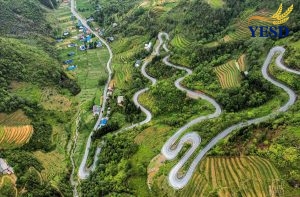
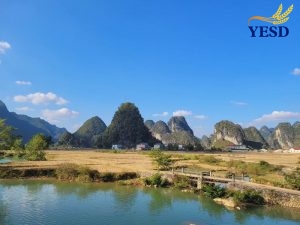
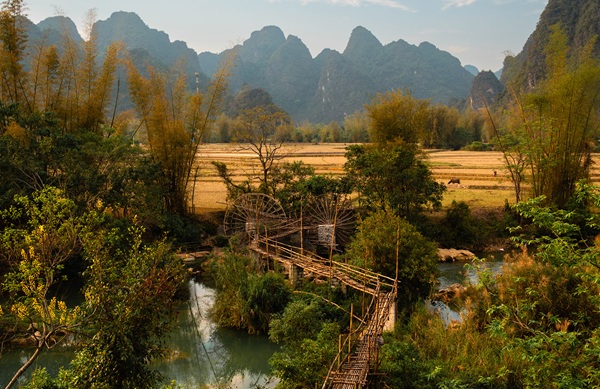
One thing I loved once I looked at the map afterward: the whole route forms this neat, compact loop through eastern Cao Bang, with Ban Gioc Waterfall, Nguom Ngao Cave, and Angel Eye Mountain (also called Thung Mountain) all sitting refreshingly close to each other. Nobody designed this loop to punish you — the daily distances stayed short enough that we could stop whenever we wanted, whether that meant a photo break, a coffee break, or just five minutes of staring at a mountain in silence.
My version of the trip ran four days, three nights, and took me from Hanoi all the way through Nguom Ngao Cave, Ban Gioc Waterfall, Phat Tich Pagoda, the Ha Lang grass hills, Phia Thap incense village, Phuc Sen forging village, Holy Eye Mountain, and Cao Bang City, before delivering me safely back to Hanoi. Here’s exactly how my four days unfolded.
Day 1: Hanoi → Nguom Ngao Cave
My guide and driver rolled up to the hotel lobby right at 7:30 AM, and thank goodness I’d already inhaled my coffee, because this was a proper all-day drive. We headed north toward Trung Khanh district, tracing the Vietnam–China border, and made our first big stop at Nguom Ngao Cave. Walking through a cave that’s been quietly forming for 300 million years has a funny way of making your inbox feel very, very small. That night, we crashed at a cozy local homestay organized by YESD Travel in Nguom Ngao, and I slept like a rock.
Day 2: Ban Gioc Waterfall → Phat Tich Pagoda → Ha Lang Grass Hills
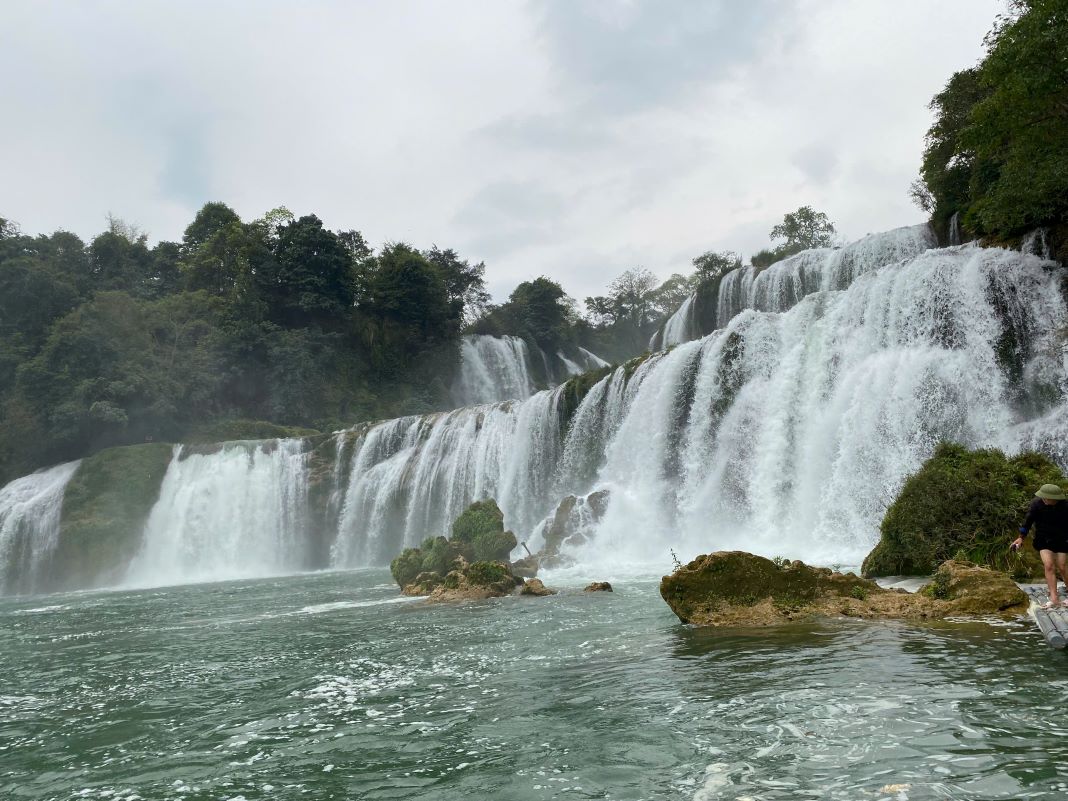
If I had to pick one morning from the entire trip, it’d be this one. After breakfast, we hopped on a little boat and floated right up next to Ban Gioc Waterfall — one of the largest waterfalls on the planet and, without question, the star of the show. Watching over 300 meters of water thunder down along the Vietnam–China border made the whole boat go quiet for a second. Even our chatty group had nothing to say.
From there, we wandered over to Phat Tich Truc Lam Ban Gioc Pagoda, the very first pagoda ever built in this far-flung corner of Vietnam. It opened back in December 2014 and sits tucked against Phia Nham Mountain, just 500 meters from the waterfall — a peaceful little stop with views that felt almost unfair to have all to ourselves.
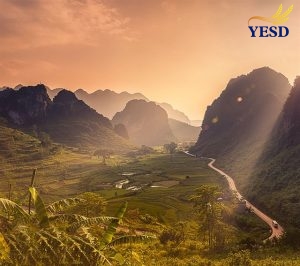
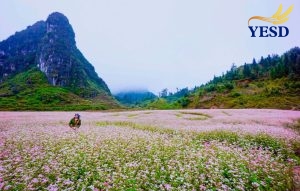
Next, we rode out to the Ba Quang Grass Hills in Ha Lang district, where the fields shift from green to gold to a fiery orange, like the landscape decided to stage its own slow-motion sunset. I took approximately one hundred photos and regret none of them. We headed back to our homestay in Nguom Ngao that evening for round two of cozy nights. Local food at the homestay, I must say, definitely satifies my taste buds.
Day 3: Nguom Ngao → Phuc Sen Forging Village → Phia Thap Incense Village → Holy Eye Mountain
I fueled up on breakfast knowing today was the cultural deep-dive of the trip,
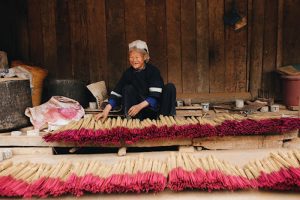
and it did not disappoint. We stopped first in Phia Thap Village, where the Nung ethnic community still hand-crafts incense using techniques passed down for generations. There was nothing polished or performed about it — just quiet, unglamorous tradition, which somehow made it hit harder.
From there, we rolled into Phuc Sen Village, home to blacksmiths whose craft traces back to the 10th and 11th centuries, when local artisans forged weapons for Nung Ton Phuc and Nung Tri Cao’s fight against the Song army. Watching sparks fly off centuries-old techniques never got old, and I may have lingered longer than necessary just soaking it in.
Before rolling into Cao Bang City, we made one last stop at Mat Than, better known as Holy Eye Mountain. The local Tay people call it “Phja Piót,” which roughly translates to a mountain with a hole punched clean through it, as if the wind carved its own personal shortcut. It was mystical, it was Instagram gold, and it was the perf
ect final stop before we settled into the City for the night.
Day 4: Cao Bang City → Hanoi
After a relaxed breakfast, we headed back to Hanoi. Our guide built in a proper leg-stretch break along the way, which I was quietly grateful for, because nobody’s body loves sitting still that long. We rolled back into Hanoi and got dropped at the hotel around 5:30 PM, officially wrapping up the adventure — tired, happy, and already scheming about when I could come back.
My drivers knew this region inside and out, and it showed. When we mentioned we love proper, hole-in-the-wall Vietnamese food, they took us to out-of-the-way spots with zero other tourists in sight, two days in a row. On our final evening, they even invited us out for food and drinks at a local bia hoi joint — because apparently, “tour guide” and “new friend” aren’t mutually exclusive in Cao Bang.
Easy Riders Cao Bang Loop Tours For The Adventurous
If you’re a first-time loop rider, traveling as a couple, or just someone who’d rather not white-knuckle a motorbike for eight hours straight, this is the low-stress adventure you’ve been hoping. Yesd also offers private easy riders Ha Giang Cao Bang tour, from 5 to 6 days, enough time to experience all the highlights.
Eating My Way Through Cao Bang
Banh Cuon: Vietnam’s Tasty Underrated Dish
If you haven’t had banh cuon in Vietnam yet, fix that immediately. These steamed rice flour rolls come stuffed with different fillings depending on different regional version and on how you order them, served alongside a warm dipping broth. Every version I tried across Vietnam was fresh, cheap, and completely worth the calories. The Cao Bang fillings version was quite different, the broth tasted much lighter. A perfect dish to start the day I would say.
Sour Cao Bang Pho
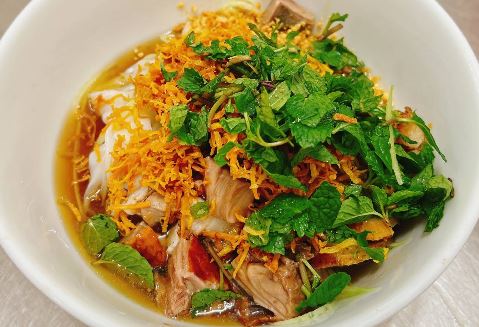
During the Loop tour, there many specialties of this region you should try, sour Pho is on top of my must recommended list. For breakfast, my special advise, just walk into any small restaurant, if it’s packed with locals, it’s the right place. I tried duck pho and sour Pho at random crowed local restaurants, both turned out amazing. The broth was rich in flavour and the meat was super tender. Total cost for both dishes? About 100,000 VND.
Where I Stayed (And Where You Should Too)
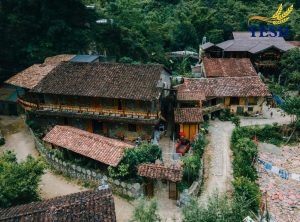
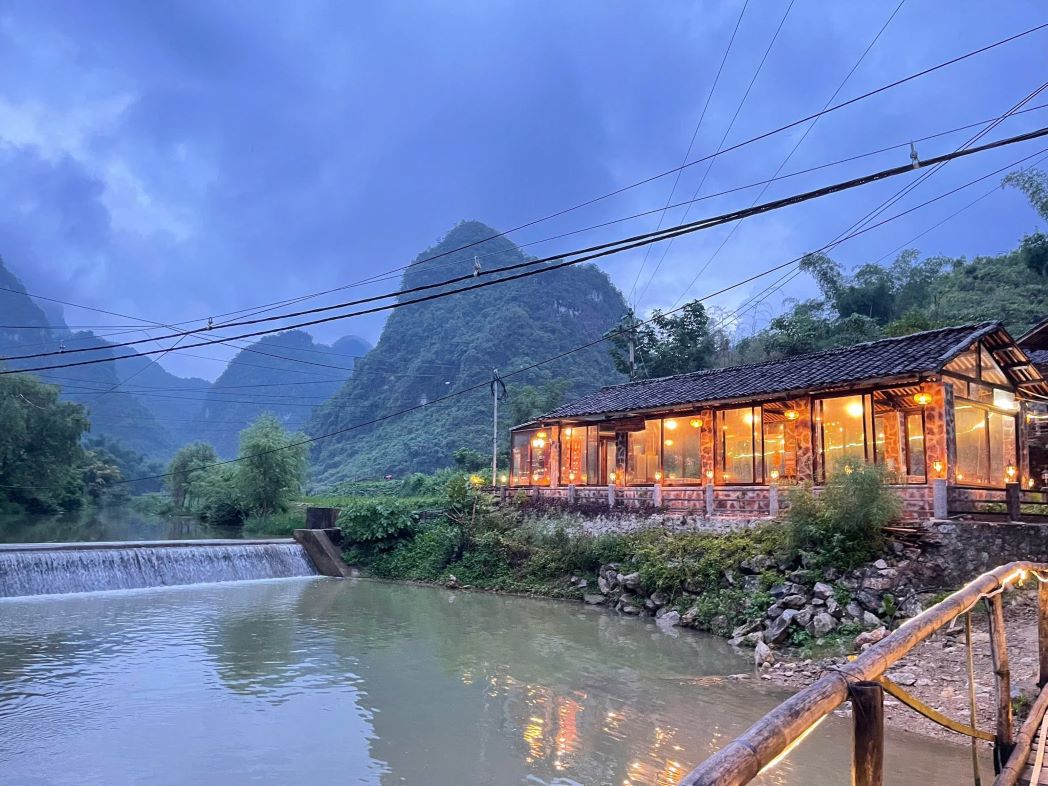
Cao Bang has accommodation for every budget, from backpacker dorms to boutique hotels for travelers who want a bit more comfort. My advice? Stay on or very near the “famous spot” or “city center”— it puts you within easy walking distance of the best food, markets, and river and mountain views. Lan Rung homestay arranged by YESD is one of the place I really enjoyed. To be honest, I didn’t expect much but I actually exceeded my expectation. Located in the unique ancient stone village of Khuoi Ky, bordering a stream and just a short distance from Ban Gioc Waterfall, this homestay steeped in Tay ethnic culture, offering a streamside restaurant, a garden, and clean guest rooms with scenic views of the natural mountain landscape.
So… Is the Cao Bang Loop Worth It?
Yes. A billion times yes. This destination sits right on the edge of being “discovered,” and right now, it’s still genuine, welcoming, and refreshingly un-touristy. We ate full meals for less than a single dish costs in Hanoi’s Old Quarter, slept well in cheap, comfortable rooms, and rode mountain roads that felt like ours alone. It reminded me of that rare kind of destination where the infrastructure is just enough to support travelers, but tourism hasn’t swallowed the place whole. If you want an adventure that still feels like an adventure, book your trip now — before the rest of the backpacking world catches on.
Book your Cao Bang Loop Tour with YESD here!
Thanks for reading — now go pack your bags.